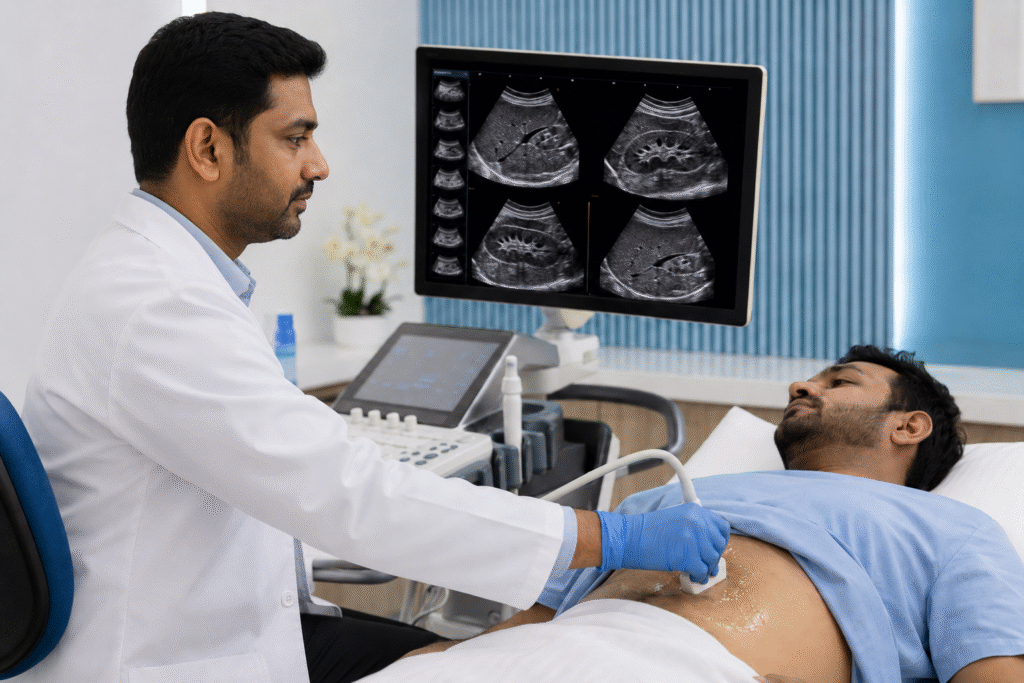
Ultrasound Centre in Faridabad: Role of Ultrasound in Kidney and Liver Health
Introduction
Kidney and liver problems can develop gradually and may not always cause obvious symptoms in the early stages. Persistent abdominal discomfort, swelling, changes in urination, unexplained fatigue, nausea, or abnormal blood test results may sometimes require further evaluation. This is where diagnostic imaging becomes important. Visiting an Ultrasound Centre in Faridabad can help patients receive a non-invasive imaging test that allows doctors to examine the kidneys, liver, gallbladder, urinary bladder, and other abdominal organs.
Ultrasound uses high-frequency sound waves to create images of internal organs. It does not use ionizing radiation, which makes it a commonly used imaging method for many abdominal and urinary concerns. The need for an ultrasound should always be decided by a qualified medical professional based on symptoms, examination, and medical history.
How Ultrasound Helps Evaluate Kidney Health
The kidneys play an important role in filtering waste, balancing fluids, and supporting blood pressure regulation. When kidney-related symptoms appear, imaging may be recommended to understand whether there are structural changes or other visible concerns.
A kidney ultrasound may help doctors evaluate:
- Kidney size and shape
- Possible kidney stones
- Swelling of the kidneys
- Urinary obstruction
- Cysts or other structural changes
- Bladder-related concerns
- Changes linked with recurrent urinary symptoms
Patients looking for an Ultrasound Centre in Faridabad may be referred for kidney imaging if they experience persistent side pain, blood in the urine, recurrent urinary infections, reduced urine output, or abnormal kidney-function reports.
Ultrasound findings are usually interpreted alongside blood tests, urine tests, and clinical symptoms. For patients with more complex kidney concerns, consultation with the best kidney doctor in Faridabad may also be recommended.
Role of Ultrasound in Liver Evaluation
The liver performs many essential functions, including processing nutrients, supporting digestion, and removing harmful substances from the bloodstream. Because liver problems can sometimes remain silent in early stages, imaging may help provide additional information when blood tests or symptoms raise concern.
A liver ultrasound may help assess:
- Liver size and structure
- Fatty changes
- Certain cysts or masses
- Gallbladder problems
- Bile duct changes
- Signs that may need further medical evaluation
Patients may be advised to undergo an ultrasound if they have upper abdominal discomfort, unexplained jaundice, abnormal liver-function tests, persistent nausea, or risk factors for fatty liver disease.
At an Ultrasound Centre in Faridabad, a liver scan can provide doctors with images that may help guide the next step. However, an ultrasound alone does not always confirm a diagnosis. Additional tests may be needed depending on the findings.
Can Ultrasound Detect Kidney Stones?
Ultrasound is commonly used when kidney stones are suspected. It may help detect stones, swelling, or obstruction in the urinary system. However, not all stones are equally easy to see on ultrasound, and the doctor may recommend another imaging test if more detail is required.
People experiencing severe side or back pain, nausea, vomiting, blood in the urine, or difficulty urinating should seek medical evaluation rather than relying on symptoms alone.
Patients searching for ultrasound Faridabad for kidney stone evaluation should choose a hospital or diagnostic setup where imaging findings can be reviewed by the appropriate physician or specialist.
Can Ultrasound Help Identify Fatty Liver?
Fatty liver is often discovered during routine imaging or after abnormal liver-function tests. An abdominal ultrasound may show changes suggestive of fat accumulation in the liver.
If fatty liver is suspected, the doctor may also consider:
- Blood tests
- Weight and BMI
- Blood sugar levels
- Cholesterol levels
- Lifestyle habits
- Alcohol use
- Other medical conditions
The ultrasound result should be interpreted as part of the complete clinical picture. A suitable Faridabad hospital can make this process easier by connecting imaging, physician consultation, and follow-up care.
What Happens During a Kidney or Liver Ultrasound?
A kidney or liver ultrasound is generally simple and non-invasive. The patient usually lies on an examination table while a gel is applied to the skin. A handheld device called a transducer is then moved over the abdomen to create images on a monitor.
Depending on the type of scan, patients may be advised to fast for several hours or drink water before the test. Preparation instructions should be followed carefully because they can affect image quality.
Patients visiting an Ultrasound Centre in Faridabad should inform the healthcare team about previous surgeries, ongoing treatment, pregnancy, or any major medical condition.
When Should You Consider an Ultrasound?
An ultrasound may be recommended when a patient experiences:
- Persistent abdominal pain
- Pain in the side or lower back
- Changes in urination
- Blood in the urine
- Unexplained swelling
- Abnormal kidney-function tests
- Abnormal liver-function tests
- Jaundice
- Recurrent urinary infections
- Suspected gallstones or kidney stones
The scan should be performed based on medical advice. Self-requesting repeated imaging without clinical guidance may not be necessary..
Why Hospital-Based Ultrasound Can Be Helpful
Choosing a hospital-based Ultrasound Centre in Faridabad can make diagnosis and follow-up more convenient. Patients may need physician consultation, blood tests, urine tests, kidney evaluation, or further specialist guidance after the scan.
A coordinated Faridabad hospital setup can help connect imaging findings with the patient’s symptoms and medical history. This is especially useful when kidney or liver concerns are linked with diabetes, high blood pressure, obesity, or other long-term conditions.
For kidney-related problems, patients may also need consultation with the best kidney doctor in Faridabad depending on the severity and test findings.
Preparing for an Ultrasound
Preparation varies according to the type of scan. For liver or gallbladder imaging, fasting may sometimes be advised. For certain urinary or pelvic scans, patients may be asked to arrive with a full bladder.
Always follow the instructions given by the hospital or imaging centre. Proper preparation can help produce clearer images and reduce the need for repeat testing.
Conclusion
Ultrasound plays an important role in evaluating kidney and liver health by providing detailed images of internal organs without using ionizing radiation. It may help identify structural changes, kidney stones, urinary obstruction, fatty liver, gallbladder problems, and other concerns that require medical attention.
Choosing an Ultrasound Centre in Faridabad with access to physician consultation and specialist support can make the diagnostic process more organised. Patients searching for ultrasound Faridabad, a reliable Faridabad hospital, or guidance from the best kidney doctor in Faridabad should focus on timely evaluation, proper report interpretation, and follow-up based on their individual condition.
Frequently Asked Questions
A kidney ultrasound may help doctors evaluate kidney size, structural changes, cysts, possible stones, swelling, urinary obstruction, and certain bladder-related concerns.
An ultrasound may show changes suggestive of fat accumulation in the liver. Doctors usually review the imaging along with blood tests, symptoms, weight, and other health factors.
Preparation depends on the type of scan. Fasting may be advised for some liver or gallbladder scans, while certain urinary scans may require a full bladder. Follow the instructions provided by the imaging centre.
A doctor may recommend an ultrasound for persistent side pain, urinary changes, blood in the urine, recurrent infections, or abnormal kidney-function reports.