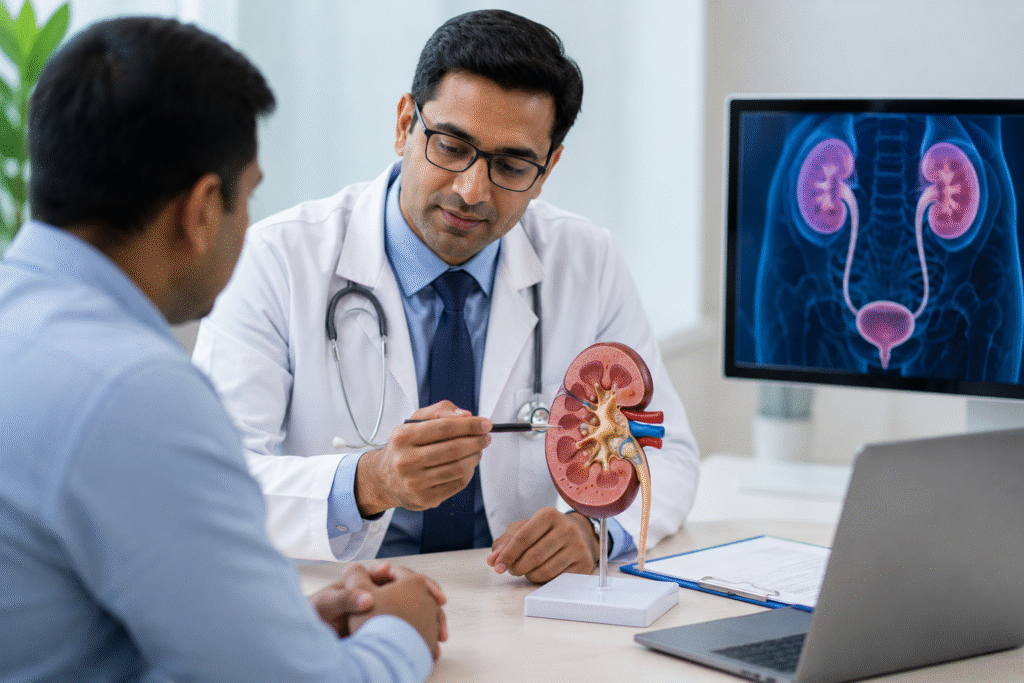
Best Kidney Doctor in Faridabad: Symptoms, Treatment, and When to Consult
Introduction
Kidneys perform an important role in filtering waste and excess fluid from the blood. However, kidney-related conditions may not always produce noticeable symptoms during their early stages. Some patients only discover a kidney problem during routine blood or urine testing. This makes timely consultation with the Best kidney doctor in Faridabad important for people experiencing urinary changes, swelling, recurring kidney stones, or other warning signs. Early medical evaluation can help identify the condition and guide an appropriate treatment plan.
Kidney problems may include kidney stones, infections, acute kidney injury, chronic kidney disease, cysts, or reduced kidney function. Treatment depends on the type and severity of the condition. A kidney specialist reviews symptoms, medical history, test results, and existing health conditions before recommending medicines, lifestyle changes, further testing, dialysis, or another suitable treatment.
Common Symptoms of Kidney Problems
Kidney disease can sometimes progress without obvious early symptoms. When warning signs appear, they should not be ignored, especially when they continue or become more severe. People with diabetes, high blood pressure, heart-related conditions, obesity, a family history of kidney disease, or previous kidney damage may need regular monitoring.
Consider consulting the Best kidney doctor in Faridabad when you experience:
- Blood or unusual changes in urine
- Frequent or reduced urination
- Swelling in the feet, ankles, hands, or face
- Persistent weakness or unusual tiredness
- Pain in the back, side, lower abdomen, or groin
- Nausea, loss of appetite, or unexplained discomfort
- Shortness of breath or increasing swelling
- Repeated urinary infections or kidney stones
These symptoms can also occur due to other medical conditions. Therefore, proper diagnosis is necessary instead of relying on assumptions or self-medication.
Kidney Stone Symptoms and Treatment
Kidney stones are hard deposits that form in the urinary system. Some small stones may pass without producing noticeable symptoms, while others can cause sharp pain in the back, side, lower abdomen, or groin. Blood in the urine, nausea, and discomfort while urinating may also occur. Severe pain, bleeding, or a stone that blocks the urinary tract may require urgent medical attention.
The Best kidney stone doctor in Faridabad may recommend treatment based on the stone’s size, position, type, symptoms, and whether it is blocking urine flow. Depending on the diagnosis, treatment may involve:
- Pain-management support
- Medicines to help the stone pass
- Hydration guidance based on the patient’s condition
- Tests to understand the size and location of the stone
- Procedures for larger or obstructive stones
- Preventive advice to reduce the risk of recurrence
Patients should not delay visiting the Best kidney stone doctor in Faridabad if they have intense pain, fever, vomiting, blood in the urine, difficulty urinating, or repeated stone episodes.
How Kidney Problems Are Diagnosed
Consultation with the Best kidney doctor in Faridabad generally begins with a review of the patient’s symptoms, medical history, current medicines, and existing conditions. Blood and urine tests may be used to assess kidney function and look for signs of kidney damage. Imaging may also be advised when kidney stones, obstruction, infection, or structural concerns are suspected. Early testing is valuable because many people with early kidney disease may not experience clear symptoms.
Regular kidney evaluation may be particularly important for people living with diabetes or high blood pressure. Timely diagnosis allows the doctor to develop a plan for monitoring kidney function and managing factors that could contribute to further damage.
Treatment for Kidney Disease
Treatment depends on the underlying cause and the amount of kidney damage. The Best kidney doctor in Faridabad may recommend medicines, blood pressure or diabetes management, dietary guidance, fluid-related advice, and regular follow-up tests. Patients should only change medicines, diet, or fluid intake after discussing it with their treating doctor.
When kidney function becomes severely reduced, dialysis or kidney transplantation may be considered. Dialysis helps remove waste products and extra fluid from the blood when the kidneys can no longer perform this function adequately. The decision to start dialysis depends on symptoms, test results, overall health, and medical evaluation—not simply on a single number.
Choosing the Best Dialysis Center Near Me
Patients searching for the best dialysis center near me should focus on safety, qualified supervision, hygiene, continuity of treatment, emergency readiness, and clear communication with the healthcare team. Dialysis schedules and duration are prescribed according to the individual’s medical condition.
The right best dialysis center near me should also provide guidance about vascular access care, medicines, diet, fluid limits, and symptoms that require urgent attention. Patients undergoing dialysis should immediately report fever, bleeding, redness, swelling, pain, drainage, or changes around their access site to their healthcare team.
Benefits of Multispecialty Hospital-Based Kidney Care
Kidney patients may also have diabetes, hypertension, heart-related concerns, infections, or other medical conditions. Choosing the best multispecialty hospital in Faridabad can make care more coordinated by providing specialist consultation, diagnostics, emergency support, and follow-up within one hospital environment.
People searching for a Faridabad best hospital should consider factors such as access to the required specialist, diagnostic support, dialysis facilities, patient monitoring, treatment communication, and emergency readiness. Promotional labels alone should not replace proper verification of services and doctor availability.
A Faridabad best hospital with 24×7 Emergency Services can be especially helpful when patients experience sudden breathing difficulty, severe pain, reduced urine output, confusion, swelling, fever, or other urgent symptoms. However, any severe or rapidly worsening symptom should be treated as a medical emergency.
Why Timely Kidney Consultation Matters
Delaying kidney evaluation can allow an underlying problem to progress unnoticed. Consulting the Best kidney doctor in Faridabad early gives patients an opportunity to understand their condition, complete the required tests, and begin appropriate care.
Arsh Hospital provides hospital-based support for patients seeking kidney consultation, diagnostic evaluation, dialysis-related guidance, and coordinated medical care. With access to specialist support and 24×7 Emergency Services, patients can receive attention for routine kidney concerns as well as urgent medical situations.
Conclusion
Kidney problems may begin quietly, but timely evaluation can support better diagnosis and treatment planning. Whether the concern is urinary changes, swelling, reduced kidney function, recurring stones, or dialysis support, consulting the Best kidney doctor in Faridabad is an important step.
Patients looking for the Best kidney stone doctor in Faridabad, the best dialysis center near me, or the best multispecialty hospital in Faridabad should choose care based on medical expertise, diagnostic access, safety, emergency readiness, and reliable follow-up.
Frequently Asked Questions
Consult a kidney specialist for blood in the urine, persistent swelling, reduced urination, recurring kidney stones, unexplained weakness, abnormal kidney test results, or ongoing urinary concerns.
Severe pain, fever, repeated vomiting, bleeding, difficulty urinating, or suspected urinary blockage requires prompt medical attention.
No. Dialysis is generally considered when kidney function is severely reduced and the patient’s symptoms, test results, and overall condition indicate that it is needed.
Check medical supervision, hygiene, monitoring, emergency preparedness, access-care guidance, continuity of treatment, and communication with the dialysis team.